AI-Powered Speech Recognition in Emergency Medical Services
Digital documentation is transformingthe emergency response chain
In life-threatening situations, every second counts. In addition to rapid medical intervention, precise and comprehensive incident documentation is crucial for the success of subsequent treatment. However, under extreme conditions—stress, noise, poor visibility, or restricted mobility – that conventional documentation becomes barely practicable.
This is where modern technology comes in: AI-powered speech recognition in emergency medical services enables first responders to dictate their observations and actions directly. The AI automatically converts spoken content into a structured digital patient record — in real time, hands-free and with full offline capability.
Why conventional incident documentation often fails in emergency medical services
Whether in military combat, mass casualty incidents, or under harsh environmental conditions, the framework for handwritten notes or manual entries is poor. Time pressure, physical strain, and limited visibility often lead to information being documented incompletely or with significant delays.
These documentation gaps pose a substantial risk—particularly during the handover to follow-on medical units or clinics. Inaccurate incident documentation can complicate aftercare and increase the likelihood of medical errors.
AI-powered speech recognition for medical services
AI-supported speech recognition in medical services refers to the use of artificial intelligence for the automatic capture, transcription, and structuring of medical incident data via voice input—even under extreme operational conditions.
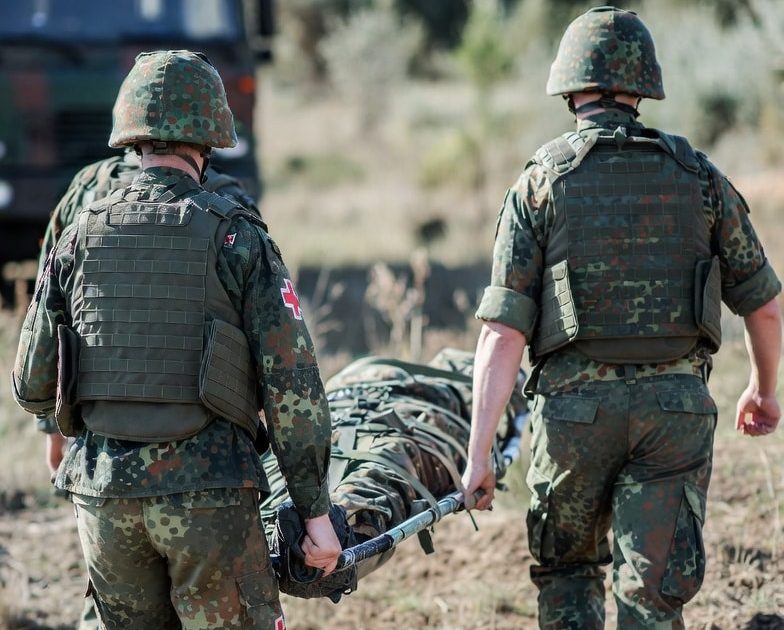
In collaboration with BWI (the Bundeswehr’s IT system house), an AI application specifically tailored to medical services was developed. Together, we successfully conducted an experiment to investigate whether and how speech recognition can digitize the rescue chain by documenting the care of wounded soldiers in an offline scenario under operational conditions.
The experiment was concluded successfully!
The speech recognition system identifies medical terminology as well as typical tactical dialogues used by first responders—even amidst high ambient noise, stress, or unclear pronunciation.
Spoken language is:
- Reliably converted into text
- Automatically structured
- Enriched with timestamps and optional location data
- Saved directly into a digital patient record
This creates complete, standardized incident documentation without responders having to take their hands off medical care.
Offline-Capable Speech Recognition Under Extreme Conditions
One decisive advantage of the solution is its fully offline capability. The AI-based speech recognition runs directly on a standard mobile device that first responders carry with them anyway. Combined with a headset integrated into the helmet, complete freedom of movement is maintained.
Particularly in operational areas without a stable network connection — such as military environments or disaster response operations — this offline functionality is essential. Documentation is carried out reliably and independently of any external infrastructure.
Early tests confirm: AI speech recognition
proves effective in action
During initial tests conducted under realistic conditions — including noise, stress and challenging environmental factors — the prototype proved convincing.
The AI reliably recognised speech and accurately transcribed content, even under adverse circumstances.
This demonstrates a new approach to incident documentation: all relevant medical information is captured without disrupting the flow of rescue operations.
Advantages of AI-powered speech recognition in emergency medical services
Automated voice documentation offers decisive advantages:
- seamless and real-time incident documentation
- hands-free operation during medical treatment
- reduced errors during patient handovers
- standardised digital patient records
- reduced workload for medical and rescue personnel
- improved follow-up care through complete and accurate data
These advantages make AI-powered speech recognition a central component of the digital emergency response chain.
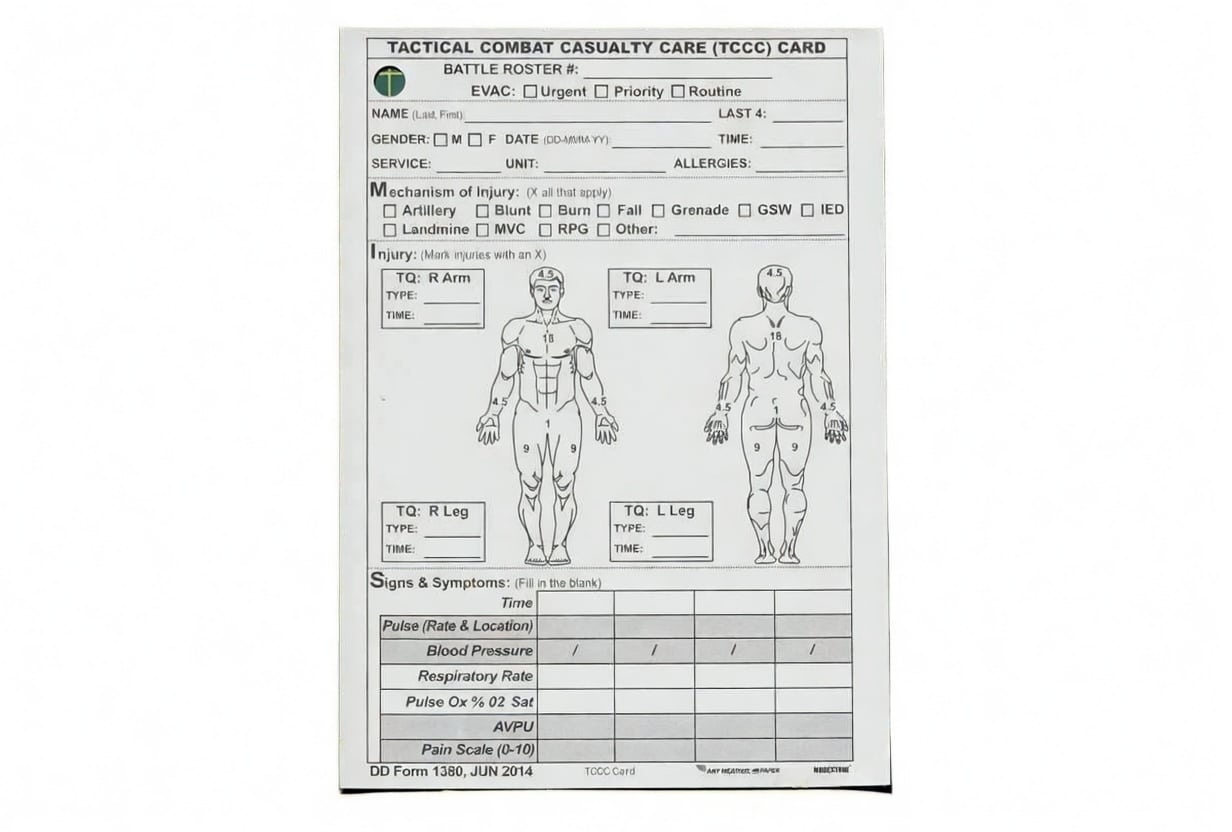
Perspective: Digital documentation as the standard for the
emergency response chain
The use of AI-based speech recognition is not limited to military scenarios. Civilian emergency medical services equally benefit from fast, comprehensive and standardised incident documentation.
In the long term, digital AI-powered voice documentation is set to become a standard across the entire emergency response chain — from initial carer through patient handover to clinical follow-up treatment. It improves the quality of care, eliminates sources of error, and relieves the burden on medical personnel — even under the most challenging conditions.
Take advantage of voice-driven documentation today.
We provide comprehensive support for your digital transformation and the implementation of your use cases. In a free initial consultation, we’ll advise you individually and work together to find tailored solutions for your organization.